• Skip to main content
  • Skip to footer
Charles Gupton

Charles Gupton

  • Home
  • Motion
  • Stills
  • Case Studies
  • About
  • Blog

Seth Godin

Returning to your “Home”


As a result of several unexpected events over the last few months, Linda and I have been entirely out of sync with our normal routine. All of the systems that guide our work and productivity have been affected. It seems as if every form of traction has instead sent us spinning; and virtually all plans for forward motion have come to a grinding halt.

In our struggle to get back to “normal,” we’ve started asking – with great fear – is this our new normal? Will this be the way it will always be from here forward?

Have you ever been there? Are you there right now?

It was in this mindset that I happened to listen to the most recent TED talk by Elizabeth Gilbert entitled, “Success, Failure and the Drive to Keep Creating.” In it, Gilbert talks about discovering the need to return to her “home,” her name for that place where she is safe and most needs to be in order to create. For her, ‘home’ is her process of writing.

As Linda and I talked about our “home” – or place of creating – I realized for me, “home” is the implementation of  understanding, or rather, taking action on what I’m learning.

What that means is that for me, knowledge isn’t practical without applying it. My satisfaction comes from learning something and putting it to use. Whether it is in the form of producing a still photograph, short film, blog post, presentation, or even a resource shared with a friend over lunch, the place I realize my contribution is when I transfer my value from what I’ve gleaned and synthesized to someone who can use it to add meaning or impact to their life. It is the process of that exchange that determines my place of comfort.

I’d like to be able to say that my place of comfort is simply “being.” That wherever I am, I’m just comfortable with myself, whether at rest or in motion. But my reality is that I need to be synthesizing information and sharing it in some form. In that process I actually find my rest and my sense of purpose combined.

It’s in these small revelations stacked one upon another that I find great insights. It’s these insights that turn on my lights of understanding and empathy to help other people tell their story or reach their higher potential.

Because, as Seth Godin wrote in a recent post on generosity, when you turn on a light for yourself you often make that same light available for others.

Where do you find your “home,” that place for safe creating? How does creating in that space allow you to turn on the light of insight and value for others?

Charles
 

Are You Willing to Ask?

How much do you want it? 

Whatever ‘it’ is, how often have you wanted something so badly that you could taste it? But for whatever reason you were afraid to ask?

Even though I’ve known forever that if I want something, I’ve got to ask for it or else I’ll get either the standard fare or nothing, I still have difficulty asking.

Most of the time we don’t ask it’s because we fear rejection. That fear can manifest itself in living with the status quo or, as I often do, try to do something on my own that I really need help with because I don’t want to be told “I can’t help” or worse, be thought of as inadequate because I asked.

Either way, that fear is causing you and me to achieve less than we’re capable of and enjoying the process less than we should because of it.

I had the good fortune to hear Jia Jiang speak at a Storyline conference recently. It was Jiang’s quest to face rejection and move into the resistance that the fear generates that helped me decide to choose the word ‘ask’ as one of my guiding words for 2013. You can read about Jiang’s ‘100 Days of Rejection’ and watch his TED talk if you want to be challenged to face your own versions of rejection.

What I’ve come to realize in trying to grow beyond my current abilities to have an impact through my work is that I need other people.

I can’t do what I believe I need to do without learning more, unlocking the access to people and places that I don’t have keys to, and collaborating with folks who have skills that I lack but are critical to delivering the quality of service that I expect.

To take ownership of my vision and see it through I must face rejection. Because what I’ve discovered is worse – far worse – than rejection is missing a significant opportunity because of fear.

Jia Jiang states it well.

My rejection therapy taught me that “the worst they can say is no” is actually not true. In fact, the worst they can say is “you didn’t even ask”. It implies I said ‘no’ to myself before others could reject me. If I have a good reason, it is my duty to step out of my own comfort zone to ask, no matter how difficult and impossible the request is.

Although I’ve focused on the process of ‘asking’ throughout this year, I have yet to find that it comes easy to me. Every time I ask for something that I’m uncomfortable with, my stomach churns. Every. Time.

But I am learning to ask anyway. Discomfort is a modest investment to make to get the abundant returns that most ‘asking’ allows for.

Becoming more cognizant of my own fear has heightened my consciousness of others’ as well. It has made me acutely aware of the self-imposed limitations that many of my friends and business associates are living under. I’ve come to understand that I can nudge them to increase their boldness but I cannot force them to grow. Their boundaries are what they are.

Often, the fear we recognize in others is a reflection of our own angst. I’m trying to use the anxiety that I encounter as a mirror to reflect my own walls of comfort.

The discomfort of trying and the possible disappointment that threatens when we consider trying are great impediments to making the effort. But as Seth Godin pointed out in a recent post, “For many people, apparently, it’s better to not get what you want than it is to be disappointed. The resistance is powerful indeed.”

Indeed.

How are you facing resistance and asking for what you need to manifest your vision? 

Charles


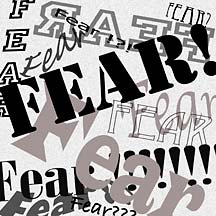
What do You Fear?

What do you fear? Why? What is your response to it?

I ask because I’ve been reflecting on a conversation this week with a woman in her late 70s who started in on a riff about the inauguration of President Obama and then on blacks in general. All of the remarks were derogatory and racist.

What fears are holding you back?

First of all, I didn’t how to respond. I learned years ago that to answer unfounded emotion with reason would only fan the emotional flame and quite likely burn any bridge of communication. If that bridge of connection is destroyed, there is not going to be any meaningful conversation nor any hope of altering another’s perspective. I’ve witnessed, too often, two sides screaming their point of view at each other, each believing that sheer volume, in both decibels and information, would sway the other’s point of view. I’ve never seen either side budge.

Second, I know that anger is seldom rational. Because anger is usually based on fear and fear is an emotional response, telling people that their anger is unfounded or unreasonable is fruitless. Nothing this woman said held a shred of logic. It would have been laughable, but it wasn’t funny. She was holding onto anger, hatred and bitterness. All because of fear. The few minutes I had with her didn’t really allow me the time to ask her about her fears and begin to address the underlying causes of them. But, as I’ve said, it did get me to thinking about my own anxiety.

I know when my anxiety level is high because I carry my stress in my gut and lower back. When that occurs, I know it’s time to, quite literally, walk away.

But what is the deep, root cause? Nearer the surface, I know that the daily headlines about the Dow tumbling or more layoffs being announced adds to the collective fear that most people share these days. But down deeper, I believe there is a fear that most folks have in common — the fear of personal insignificance.

I heard an interesting quote yesterday. “Money is a primary means of keeping score for people who have a shortage of talent.” But money is not, of course, the only means of scoring one’s significance. There’s one’s position on the organizational chart, one’s influence upon or association with those who are in any position of power or, in general, how one is viewed in relation to others in any community or tribe. With over 200 million blogs on the Internet, apparently there are a lot of people who are hoping that someone will read their thoughts and find significance in them. With so many folks piling up “friends” on their social network pages and sending out 50+ “tweets” per day, it appears there is no dearth of individuals crying out for a recognition that what they have to say has value to someone. (Is the act of posting these thoughts for you to read my cry for significance?)

Which brings me back to fear. What is it that I fear when the phone doesn’t sound for a couple of days or a client doesn’t reply to an e-mail posthaste? Do I really fear that I’m going to wind up living under a bridge sharing a bottle with my buddies around a pile of burning tires? Or do I fear that I’ve lost significance in the professional community I serve? That without the next job scheduled on the calendar, I have no value to offer my fellow man?

For the woman I was talking with, being white had once held status and power in her world. Now the blacks she knew were getting “uppity.” That presented a threat, a threat to her significance. But rather than feeling anger, I felt sad. Sad that her fear was leaving her increasingly isolated from relationships that could bring abundance and deeper significance. And sad too, as I reflected on my own fears, that I was allowing them to limit the scope of my opportunities to serve and share my talents within my community.

What are your fears? What are you angry about? Is it based on fear? How is it holding you back from giving? Serving? How can I encourage you to step out from the grip of fear?

Charles

Follow me on Twitter. (Help me feel significant?)
www.charlesguptonphoto.com

On Listening

Are you listening?
Are you listening?

I was not a great listener most of my life. Actually, I was a very poor listener. Although I could come up with a number of reasons, the bottom line was that I didn’t care about what other people thought as much as I did about what I thought. And I thought they should be more interested in what I thought too. So even though I’d wait until they stopped talking to speak, all I was waiting for was an opening to share my great wisdom. Know anyone like that?

A few years ago, a confluence of several events caused me to realize how my self-centered ways were keeping me from developing deeper relationships. I found that people don’t really care how much you know until they know how much you care. Not only does listening show that you care, it gives you information to care about.

In the spirit of the “Brand You” movement that so many branding gurus have been espousing over the last couple of years, I started refining who I wanted to become in terms of the public perception of me. I also realized that the branding I wanted to take place had less to do with how much money I spent to create a perception than it did with who I was becoming as a person. I wanted my ‘brand’ to be someone who listens well, someone who genuinely cares. Not surprising, maybe, but we all have to ‘do’ before we ‘become’.

Have I become a great listener? I don’t think so. But, I have become better. I’m learning to ask better questions as I try to clarify, to understand the heart within a statement.

As more of our conversations take the form of electronic conveyance, I see the same need to express interest in others’ thoughts. If the posts about social networking etiquette are any indication, folks are still annoyed by those who dominate the discussion with cries of “Look at me!!!”
In Seth Godin’s book Tribes, he writes “What most people want in a leader is something that’s very difficult to find: we want someone who listens.”

A great overview of the proper social graces when using Twitter can be found in this post by Jenny Cromie. Seems to me that they’re equally applicable in any conversational setting.

How are you leading? How are you listening? Do you feel that you’re being heard? What do you think?

Charles

www.charlesguptonphoto.com
Follow on Twitter

You Can be Happy

As a kid, I liked silly songs. Not much has changed really. But when I first heard Roger Miller’s songs, I was hooked. One of my favorites was, “You Can’t Rollerskate in a Buffalo Herd.” As silly as the lyrics may be, the last line of each verse and the chorus are something I have to remember every day. Especially these days, when the news at every turn is less than encouraging for most. The lines are, “…you can be happy if you’ve a mind to. All you gotta do, is put your mind to it. Knuckle down, buckle down, do it, do it, do it.” (The full version follows for your amusement below.)

I find that I don’t so much make myself happy as I decide to do a series of tasks that allow me, by taking action, to feel good in the doing. Of course, it’s easy to confuse activity with accomplishment. But I try to make sure that in my list of “to be done today” are only items which take me toward the goals I set for serving my clients and moving my life in a direction that is positive. I seldom watch TV and although I read two papers most days, I try to focus my attention on stories that feed me useful information I can act upon. Worrying about matters that are outside of my circle of influence is pointless.

Some of the things I might do which take me towards my objectives each day include: reading from several good books over my morning cup of coffee before I go to my desk; reading from several good blogs (such as Seth Godin’s) before I even check e-mail; or send an interesting link to a client and/or send a postcard to a prospective client whose work I admire. These are all things I can control. These are all things I must put my mind to. But they’re not that hard to “knuckle down, buckle down to do it, do it, do it.” And I find I’m a lot closer to being happy than if I’d listened to the prophets of doom.

How do you keep yourself happy?

Charles
www.charlesguptonphoto.com

YOU CAN’T ROLLERSKATE IN A BUFFALO HERD
Roger Miller

You can’t roller skate in a buffalo herd
But you can be happy if you’ve a mind to

You can’t take a shower in a parakeet cage
But you can be happy if you’ve a mind to

All you gotta do, is put your mind to it
Knuckle down, buckle down, do it, do it, do it

Well you can’t go swimmin’ in a baseball pool
You can’t go swimmin’ in a baseball pool
But you can be happy if you’ve a mind to

You can’t change film with a kid on your back (chain-swim)
You can’t change film with a kid on your back
But you can be happy if you’ve a mind to

You can’t drive around with a tiger in your car
But you can be happy if you’ve a mind to

All you gotta do, is put your mind to it
Knuckle down, buckle down, do it, do it, do it

Well you can’t roller skate in a buffalo herd
You can’t roller skate in a buffalo herd
But you can be happy if you’ve a mind to

You can’t go fishin’ in a watermelon patch
But you can be happy if you’ve a mind to

Footer

Contact

Phone: 919 971 8446
Email me now

  • Facebook
  • X
  • Pinterest
  • LinkedIn
  • YouTube
  • Home
  • Motion
  • Stills
  • Case Studies
  • About
  • Blog

© 2015-2024 · Charles Gupton Productions